
Shockwave Therapy in Redlands
 Shockwave Therapy in Redlands, CA
Innovative Pain Relief & Accelerated Healing
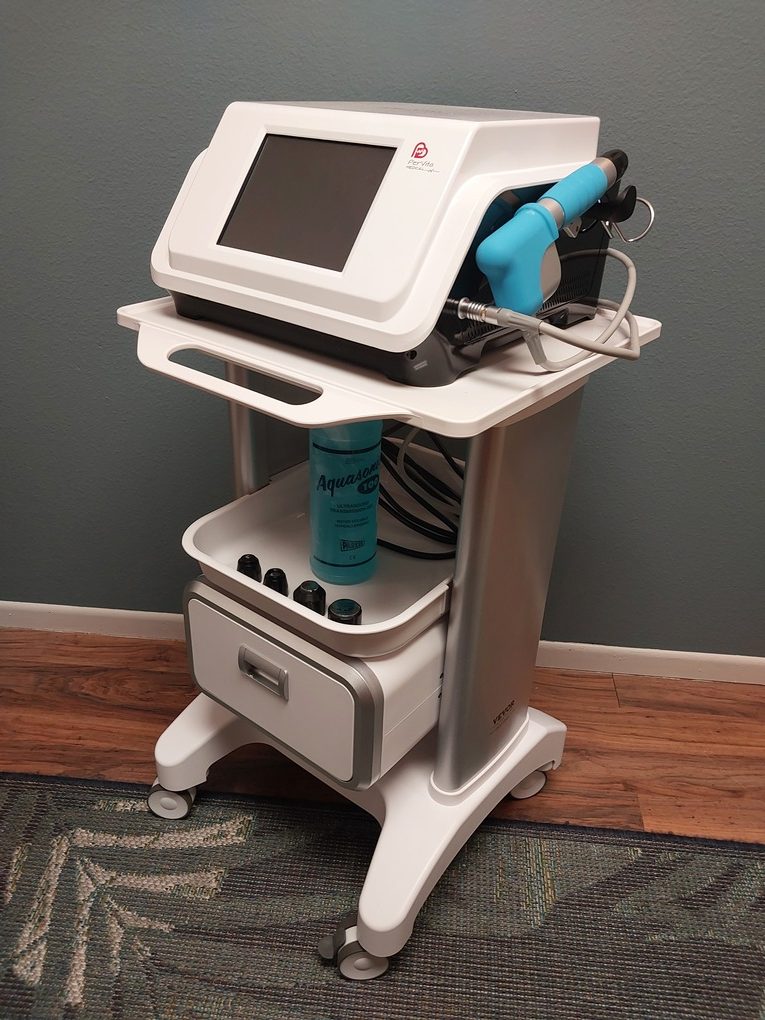
Shockwave therapy is a non-invasive treatment option for chronic pain that stimulates the body’s natural repair process to help injuries heal. At Chiropractic Sports & Injury Center, Dr. Bruce Humphries, DC uses shockwave therapy to help patients with stubborn tendon, heel, and soft tissue pain that hasn’t responded to other treatments.
What Is Shockwave Therapy?
Shockwave therapy, also called extracorporeal shockwave therapy (ESWT), is a non-invasive treatment that uses high-energy acoustic waves to stimulate tissue repair, increase circulation, and relieve pain. It has become a valuable tool for managing musculoskeletal disorders and is supported by a growing body of scientific research showing faster recovery and meaningful reductions in chronic pain.
Research Backing Shockwave Therapy
- A systematic review published in the Journal of Bone and Joint Surgery found that ESWT improved healing rates in chronic conditions like tendinitis, plantar fasciitis, and calcific tendinitis, especially when conventional treatments had failed (Speed, C.A., 2014).
- Another study from the American Journal of Sports Medicine reported that patients with plantar fasciitis experienced pain relief and improved function following ESWT treatments (Gerdesmeyer, L., et al., 2008).
 How Does Shockwave Therapy Work?
- Increased blood flow and metabolism, including the release of nitric oxide (NO): Shockwaves enhance local blood flow, delivering the oxygen and nutrients needed for cellular repair.
- Stimulation of stem cells: Helps the body heal itself.
- Stimulation of collagen production: Activates collagen-producing cells, which are essential for building stronger, more resilient tissue.
- Pain reduction: Interrupts pain signals to the brain and stimulates endorphin release, reducing discomfort and improving quality of life.
- Breakdown of calcific deposits: Sound waves can break up calcium deposits in tendons, a common cause of chronic pain and limited mobility.
- Breakdown of scar tissue: Sound waves can break down scar tissue that causes chronic pain and stiffness.
 Conditions Commonly Treated With Shockwave Therapy
 Conditions Commonly Treated With Shockwave Therapy
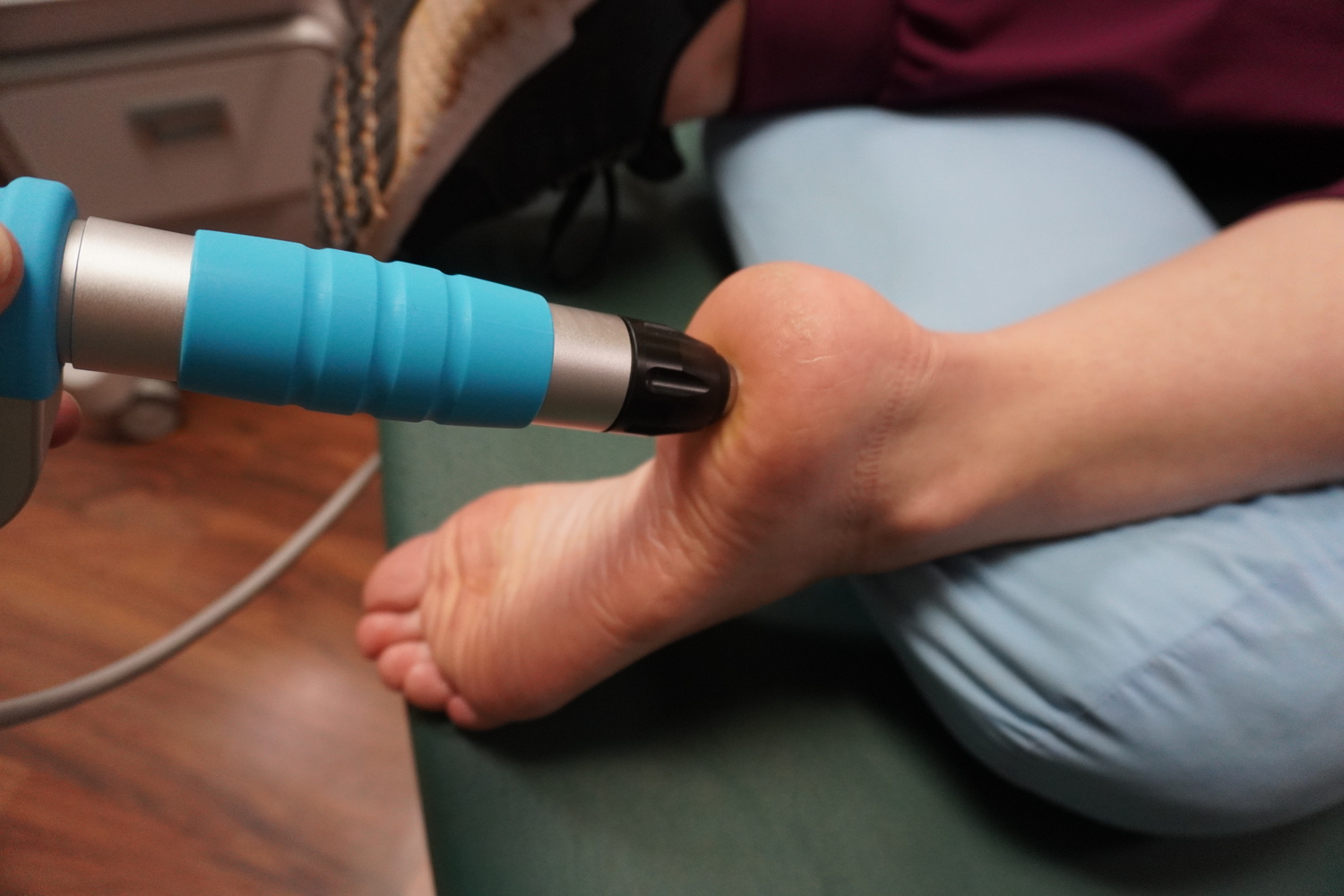
- Plantar fasciitis, including heel spurs: Effective for stubborn heel pain that does not respond to other treatments.
- Tendonitis, especially:
- Achilles tendonitis
- Rotator cuff and biceps tendonitis (shoulder)
- Knee pain
- Tennis elbow and golfer’s elbow
- Myofascial pain syndrome: Reduces muscle tension and pain.
- Shin splints: Provides pain relief and promotes healing in hard-to-treat areas.
- Chronic back or hip pain
- Calcifications
- Frozen shoulder
Shockwave therapy is also a valuable part of our sports injury care for athletes dealing with chronic tendon problems.
Evidence Supporting Its Effectiveness
- A randomized controlled trial in the Journal of Orthopaedic Research confirmed the efficacy of shockwave therapy for Achilles tendinopathy, with patients experiencing significant pain reduction (Rompe, J.D., et al., 2009).
- A 2019 Cochrane Review also highlighted that ESWT is effective for reducing pain in people with plantar fasciitis, especially for cases resistant to other conservative treatments.
What to Expect in a Session
- Quick and convenient: Sessions typically last 10–15 minutes.
- Mild to moderate discomfort: Most patients describe a tingling sensation or mild to moderate discomfort that quickly fades.
- Little downtime: You can return to most daily activities immediately.
Is Shockwave Therapy Right for You?
Shockwave therapy can be especially effective if you’ve tried other treatments like physical therapy, medication, or injections without significant improvement. It is non-invasive, and side effects are generally mild and temporary, such as short-term soreness or redness. A consultation can help determine whether shockwave therapy is the best option based on your specific condition and health history. It can also be combined with chiropractic care, massage therapy, and acupuncture. See all of our chiropractic services and conditions we treat.
References
- Speed, C.A. “Extracorporeal Shock-Wave Therapy in the Management of Chronic Tendinopathies.” Journal of Bone and Joint Surgery. 2014.
- Gerdesmeyer, L., et al. “Extracorporeal Shock Wave Therapy for the Treatment of Chronic Calcifying Tendinitis of the Rotator Cuff.” American Journal of Sports Medicine, 2008.
- Rompe, J.D., et al. “Shock wave application for chronic plantar fasciitis in running athletes.” Journal of Orthopaedic Research. 2009.
- Cochrane Review. “Shockwave therapy for plantar fasciitis.” 2019.
Shockwave Therapy FAQs
What is shockwave therapy?
Shockwave therapy, or ESWT, is a non-invasive treatment that uses high-energy acoustic waves to stimulate tissue repair, increase circulation, and relieve pain.
What conditions does shockwave therapy treat?
It is commonly used for plantar fasciitis, heel spurs, Achilles tendonitis, rotator cuff tendonitis, tennis and golfer’s elbow, shin splints, calcifications, frozen shoulder, and chronic back or hip pain.
Does shockwave therapy hurt?
Most patients feel tingling or mild to moderate discomfort during treatment that fades quickly.
How long does a shockwave session take?
Sessions typically last 10–15 minutes.
Is there downtime after shockwave therapy?
Little to none. Most patients return to their daily activities right away.
How many shockwave sessions will I need?
The number of sessions depends on your condition and how it responds. We will discuss a plan after your consultation.
Who is a good candidate for shockwave therapy?
People with chronic tendon or soft tissue pain who haven’t improved with other treatments such as physical therapy, medication, or injections are often good candidates.
Schedule a Shockwave Consultation
Contact Chiropractic Sports & Injury Center at (909) 793-9787 to learn more or schedule a consultation.